Showing posts with label Young Birders Camp. Show all posts

Wednesday, July 27, 2016

Through The Portal: Day 3

Hey Readers!


Last time on Adam's Command:

The three intrepid birders awaken early and ready for owling.  We clear house with the owls and proceed to locate a male Elegant Trogon for the group.  After some successful feeder watching in Portal, we briefly bird the South Fork of Cave Creek Canyon finding more Southeast Arizona specialties.  I photograph some arthropods before delivering a speech to the group concerning websites for birding and citizen science.  We end the night with Whiskered Screech and Elf Owls...


We got some great rest that night.  Waking up at 5, we just hung out in our room and listened from our window to the flycatchers that started the dawn chorus.  Western Wood Pewees.  Cordillerans.  Brown-cresteds.  Walking down to the mess hall for breakfast, Caleb and I looked for that fledgling Northern Pygmy Owl from last evening. It was still there.


One of its parents also flew in!!!  We had fantastic views at close range of this tiny owl.


The false-eyes on this bird were incredible

Our first stop in the morning with the group was at Dave Jasper's new yard in Portal.  Almost immediately upon arrival, we were greeted by male representatives of all three regular western oriole species:  Hooded, Bullock's, and Scott's.  We also walked along the road there and had birds such as an Inca Dove, Ladder-backed Woodpecker, Ash-throated Flycatcher, Phainopepla, Northern Cardinal, Pyrrhuloxia, and Bronzed Cowbird.


Curve-billed Thrasher

Male Bullock's Oriole

Male Scott's Oriole


Male Pyrrhuloxia

Our group

A Net-winged Beetle

Moving on after breakfast, we stopped along Paradise Road in some higher elevation desert habitat.  I discerned the deep calls of a Greater Roadrunner in the distance and then, a Rufous-crowned Sparrow began singing.  Other typical desert species were detected in our 20 minutes there.  


The view from Paradise Road.

After birding for a short while along Paradise Road, we drove slightly higher into the juniper zone.  It was there, that we stopped in at the George Walker House - a yard set up with feeders.  We had four species of hummingbirds there: Magnificent, Blue-throated, Black-chinned, and Broad-billed.  A Bridled Titmouse and Pine Siskin also enjoyed the feeders.


This Ornate Tree Lizard was displaying on a juniper trunk near where I was sitting.

A male Black-headed Grosbeak

The Pine Siskin

Mexican Jays are one of the most prominent birds of the Chiricahuas...

They can be found in many of the habitats in strong numbers and will eat almost anything.

Cliff Chipmunk

Leaving the George Walker House behind, we drove even higher into the pines and stopped at East Turkey Creek.  This area was the lowest elevation that Mexican Chickadees could be found.  We encountered many excellent high-elevation species while there for only a half hour.  A pair of Hairy Woodpeckers entering their nest cavity was an unexpected treat.  A few Plumbeous Vireos called out from the treetops with their harsh - although musical - phrases.  A Brown Creeper sang its extraordinarily high song as Hermit Thrushes produced their eerie whistles reminiscent of a flute.  Grace's Warblers were also present in the drainage as were House Wrens.  A male Western Tanager and a Red Crossbill were highlights.


Western Tanager

Red Crossbill


Despite our concerted efforts to call in a Mexican Chickadee, the little birds remained elusive...  The only Chiricahua specialty I still needed.  Running out of time to check out of the Research Station, we headed back down the mountain.  Before our group's departure, were were afforded the opportunity to listen to a biologist speak briefly on his life's research of horned lizards!  The man brought a few different species that he had captured earlier that morning as an example to all of us.  He was one of the scientists that discovered why the lizards squirt blood from their eyes when harassed.  Apparently, there is a chemical in their blood that is extremely distasteful to felids and canids and deters any further aggression.  Overall, being my first birding camp, it was an incredible experience.  Although the birding was completely spectacular, I also really enjoyed listening to the presentations, giving my own presentation, and spending time with my friends Caleb and Dorian.  Although the event was over, little did Caleb and I know that we had even more birding in store!

After gathering our things and tidying our room, we said goodbye to the leaders of the camp and many of the kids that we were able to get to know a little.  Caleb, Dorian, and I were tired, but continued to talk about the trip and other subjects on the way back to Willcox.  While driving through New Mexico for a stretch, I saw "New Mexico Lifers" such as Swainson's Hawks, Chihuahuan Ravens, Western Kingbirds, and - most notably - House Finches. :)  My Dad was waiting in the parking lot in Willcox to pick us up when we arrived.  It was great to see him again.  Sadly, Caleb and I had to say goodbye to Dorian.  He was a great guy to hang around and was definitely serious about his birds.  I surely hope to bird with him again in the future.  Not long afterwards, we were on the road again.

A major event in birding occurred not long before camp had started.  A first US record Pine Flycatcher had been found building a nest at Aliso Spring in the Santa Rita Mountain near Tucson!!!  Scores of birders had gone to see it including all of the main ABA Big Year competitors.  Caleb had even seen it with his friend Walker Noe during their SE AZ trip of a few weeks prior.  However, Caleb is always down for seconds, and my Dad was willing to traverse the rugged trail with his 4-wheeler, so we set off to find the rarest bird in America.

Driving past Apache Springs Road, we saw a rufous-morphed Red-tailed Hawk, a Broad-billed Hummingbird, and a Loggerhead Shrike.  Many White-tailed Deer were present as well.  Moving into higher and denser elevation, I spotted a couple Montezuma Quail running into cover.  My Dad got his first ever looks at this striking gamebird!  The road was in pretty rough shape, but we had seen worse while out hunting and scouting.


Arriving at the campground in which the exceedingly rare empid had been frequenting, we parked and laid in wait.  5 minutes passed and there was no sign of the flycatcher in either its nest nor in the surrounding trees.  10 minutes passed and I was accepting the fact that we might dip.  The sun was rapidly setting and all we could hear were the 'wink' calls of Mexican Jays and the occasional mournful whistle of a Dusky-capped Flycatcher.  We decided to leave after 5 more minutes of waiting.  I was certainly disappointed about missing the bird, but the epic experience at the camp overshadowed our defeat here.  While we were hopping into the car, Caleb said he heard the Pine Flycatcher's call - a distinctive 'whip'!  I couldn't believe him at first.  When he told me that he could see the bird, then I believed him!  The flycatcher was darker than most empids and had a pronounced orange mandible.


The best I could manage in the low light conditions.

This Pine Flycatcher was, by far, the rarest bird I had ever seen - an ABA first record and Code 5 (obviously).  Caleb was certainly glad to see it again.  Our drive down the mountain seemed surreal as the fact that I had actually seen the flycatcher began to sink in.  We got into Phoenix late, but it was wholly worthwhile.  I so appreciated that my non-birder Dad was willing to sacrifice sleep for us two bird-hard guys!

Today's Accomplishments:  1 Lifer!

~ The Pine Flycatcher ~

Bring my life list to...344


Godspeed and good birding,

- Joshua

Tuesday, July 12, 2016

Through The Portal: Day 1

Hey Readers!


For some time, my friend Caleb Strand and I have been planning to attend a Young Birder's Camp in the Chiricahua Mountains of extreme Southeastern Arizona.  Caleb went last year with Walker Noe who now lives in Idaho.  They had an immensely successful weekend of birding there.  Once I received the invitation from Caleb and got the ok from my parents, I signed up for the camp.  One of the camp leaders sent me an email asking whether or not I was planning to give a presentation!  I didn't know that was an option for attendees, so I thought of what I could talk about.  Then it came to me... I use eBird, Xeno-Canto, Project Noah, WhatBird, and the AZ/NM Listserv all the time.  Maybe some of these kids don't know about these great online resources?  So, I set up a power point, formulated an outline, and created some informative handouts for the camp.  I also studied a ton for this trip.  I tried learning the calls and songs of the birds that we might encounter and I also studied habitat and behavior extensively.  Additionally, I looked over potential rarities and discussed the plan of attack at length with Caleb over the phone.  And then that highly anticipated day finally came...


The Portal into the Chiricahuas

Once I double and triple checked that everything I needed was packed, we left the house and met Caleb and his Mom for breakfast.  After 'carbing' up for a long and hard weekend, we departed on the 3 or so hour drive to Willcox where we would meet the rest of the group.  Driving Southeast, we left Maricopa County and entered Pinal County...then we left Pinal County and entered Pima County.  After bisecting Pima County, we entered Cochise County.  Upon entering the Cochise County's desert grassland habitats, we started scanning intently from the car to single out a Chihuahuan Raven; a potential life bird for myself.  20 minutes into suitable habitat, Caleb calls out "Chihuahuan over here!"  I see a medium-sized corvid flying quickly away from us.  Their swift wing beats are a good clue as to their identity as is their smaller size in comparison with the Common Raven.  Also present along the roads were Swainson's Hawks, they somewhat replace Red-tailed Hawk in the grasslands.

After a long (but exciting) drive, we entered the city of Willcox, AZ.  Because we had extra time before we had to meet our group, we decided to bird at Cochise Lake - a fantastic place for SE AZ grassland and shorebird species.  We were dropped off at the lake by my Mom and Brother who were heading over to Subway to get us all lunch.  We had only a half hour, but it was certainly worthwhile!  We immediately picked up species such as Barn Swallows, Eastern Meadowlarks, and Horned Larks while walking up to the lake.  We started scanning through the many Black-necked Stilts, American Avocets, and Killdeers, we noticed some interesting birds on a sandbar just a little too far to ID.  We moved in closer and found that one was a Bonaparte's Gull in non-breeding plumage and that there were also 3 Baird's Sandpipers foraging nearby!


The Bonaparte's Gull


One of three Baird's Sandpipers we scoped out.


Also present on the lake were Mallards, Blue-winged Teal, Northern Shovelers, Long-billed Curlew, and Wilson's Phalarope.  Moving on from the lake, we began to walk towards the nearby Twin Lakes Golf Course which is known for good birding.  We didn't actually bird on the golf course, but instead, walked alongside it.  We found some interesting species there including a Vermilion Flycatcher, Tropical, Western, and Cassin's Kingbirds, and Common Yellowthroat.  Caleb saw a male Bullock's Oriole which I missed.  As an epic consolation, a Pyrrhuloxia flew into a mesquite!!!  It was my lifer and a highly anticipated bird of mine!  We also noticed several Little Striped Whiptails - a lizard found in Arizona only in 3 tiny locations including the Willcox Playa.  We also had another lizard with a limited range in the United States which was the Elegant Earless Lizard.


One of the Little Striped Whiptails we found

A juvenile Horned Lark

Not long after finding the Pyrrhuloxia, my Mom messaged me that she was almost ready to pick us up.  We had a good meal together before heading to the local library to meet up with the leaders and attendees of the Young Birder's Camp.  For the longest time, I had been a 'lone birder' without any contact whatsoever with other birders.  Obviously, I had never been to a birder's camp, so this was sure to be quite the fun experience.  I was actually the oldest birder in attendance at 18 years old and Caleb was 2nd oldest at 16.  I met another young birder named Dorian (15 years old) who Caleb knew from last year.  Turns out, he is also a Christian, so the three of us share not only our love of birding, but also our love for the Lord.  Dorian was an absolutely hilarious and dedicated birder.  We were completely unprepared for how much fun we would have together!  After saying goodbye to my Mom and Brother, we loaded up one of the camp leader's cars with our gear and took off for a quick pit stop back at Cochise Lake.

Caleb, Dorian, and I succeeded in relocating the Bonaparte's Gull and Baird's Sandpipers for the group.  After failing to find our final target for the lake - the Scaled Quail - we were driving back to the main road when Caleb spied 3 Scaled Quail running alongside our car!!!  What a way to get a lifer. I will also add that Caleb did not get a single lifer during this entire trip.  Not one.  Why?  Well, that's because he's already seen everything.  There are not very many birds in Arizona that he hasn't seen.  Maybe I'll be there someday too.  Hopefully sooner than later.  After our Scaled Quail excitement, it was off to the fabled Chiricahua Mountains - ancient homeland of the Apache people and their notorious leader, Geronimo.

The leader who drove us to the camp was named Deb Vath.  She was a very fun person to talk to.  She told us all about her trip to the Magee Marsh in Ohio where she saw many Eastern warbler species and was able to observe American Woodcocks giving their strange courtship displays.  For the remainder of the trip, Caleb and Dorian adopted backwoods accents, complete with bad grammar and the occasional "Dad gum!" outburst.  Jeff Babson and Homer Hansen (the primary trip leaders) made a quick stop at a pull-off in the grasslands to talk about the surrounding environment and look around for a few minutes.  Jeff pointed out a juvenile male Scott's Oriole far away and we also had some Black-throated Sparrows and a Loggerhead Shrike.  From what I gleaned from their informative talk, the grasslands here were once tall enough to conceal a man!  It's hard to believe how the environment would have looked then.  Eventually, the water table dropped so low that grasses weren't able to get enough water to grow that large.  After a thought-provoking lecture, we were driving up the foothills of the Chiricahua Mountains.  The sky was gray and a light mist of rain sprinkled the dry earth.  As we gained altitude, the habitat changed around us.  The sparse grasses and yuccas began to mix in with oaks and pinyon junipers.  I could begin to smell the sweetness of the forest as the rain mixed with conifer sap.  Eventually, oaks and pines dominated the hillsides around us and the trees grew increasingly taller.  I was impressed by how much green foliage this area supported.  Certainly a haven for birds hoping to escape the heat of the lowlands.

We were in search of a fantastic rarity... a Slate-throated Redstart that had been sticking around one spot in Pinery Canyon!  Caleb had already been out to see the bird with his good friend Walker only a month ago and they were successful in their endeavor.  For every other young birder in the group (including me), this would be their first time seeing this species.  Normally, Slate-throated Redstarts are found in pine-oak woodlands south of the border and into Central America.  If I found it, it would immediately become the rarest bird I had ever seen.  While traveling, we encountered Wild Turkeys, Yellow-eyed Juncos, Mexican Jays, and Bridled Titmice.  After a wonderful half-hour surrounded by some of God's best work, we had arrived at the Slate-throated Redstart stakeout spot.  I noticed the calls and songs of Hairy Woodpeckers and Hermit Thrushes right off the bat and Caleb pointed out the song of a Red-faced Warbler and Painted Redstart (a cousin of our target bird).  We walked a little ways up the trail and met up with a small group of dedicated photographers who were sporting lenses that had to be worth at least $2,000 each.  According to other birders' reports, the redstart had been coming in for a couple minutes at a time with at least a half hour pause between observations.  Our group didn't have the luxury of time as we needed to check into the Southwestern Research Station promptly at 4.  Immediately upon arriving, the bird was being seen by everyone and I looked intently into the pine that people were excitedly pointing at to see a small, unassuming bird flitting about from bough to bough.  I peered at it through my binoculars and there was my first Slate-throated Redstart.  It was quite active while foraging and did give us many good photo ops.  The Slate-throated Redstart is actually a beautiful little warbler with slate-gray upperparts and throat.  The belly is a vibrant red color and its long dark tail is trimmed with white on either side.


The best shot I could manage of my first ABA Code-4 bird

We only spent 10 minutes at the spot because of time constraints, and then we were off to the Southwestern Research Station - our base camp for the weekend.  Caleb pointed out the song of a Black-chinned Sparrow during our ascent up the hill.  Its bouncing ball song is pretty distinctive for a sparrow, but easily overlooked or passed off as something else.


Traveling on for about an hour, we finally reached the Southwestern Research Station.  After chucking our bags into our nice little room, Caleb, Dorian, and I started walking around the area to get a feel for the land and maybe see a few birds.  We made a beeline for the hummingbird feeders hoping to find Blue-throated Hummingbirds (a would-be lifer for me).  Not only did we find them, but they were the most prominent hummingbird species there!  They dominated the feeders and even chased off the larger Magnificent Hummingbirds which were also present in good numbers.  (I was shocked to see how shy and non-aggressive the Mags were!)  In addition to these larger hummer species, Many Black-chinned and one Broad-tailed Hummingbird were also visiting the feeders.


A male Blue-throated Hummingbird


A female Blue-throated Hummingbird


One of the shy male Magnificent Hummingbirds


A female Magnificent Hummingbird


While walking away from the feeders, Caleb and I noticed a medium-sized raptor flying away from us.  We both thought it may have been a Gray Hawk, but something didn't seem right.  Then, it dawned on us - it was a Northern Goshawk!  We moved on after our 'feederwatch' to a pine dominated slope that was nearby.  It was there that we heard a Buff-breasted Flycatcher!  The BBFL was not a lifer for Caleb who had seen one in SE AZ recently, but it was my first.  Of course, we wanted to get some good looks at the bird, so we investigated.  The bird wasn't overly compliant.  It moved from perch to perch quicker than I could focus my camera.


Apart from the birds I mentioned, we crossed paths with many other species at the station including but not limited to: Wild Turkeys, Dusky-capped Flycatchers, Black and Say's Phoebes, Plumbeous and Hutton's Vireos, a Grace's Warbler, a Painted Redstart, Hepatic and Summer Tanagers, and many Black-headed Grosbeaks.


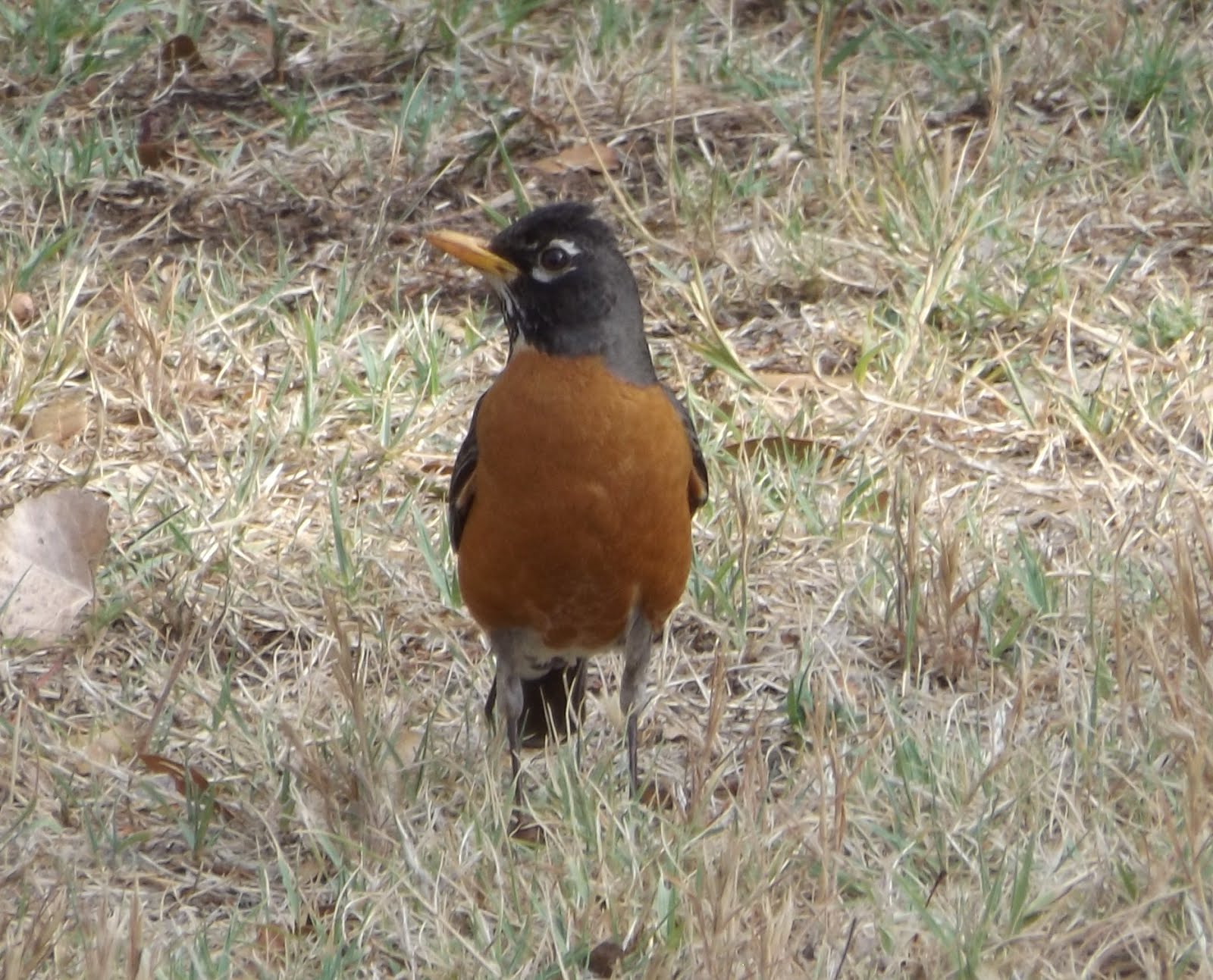
A nice American Robin


Red Satyrs were common around camp.

This Mexican Fox Squirrel is found in the United States strictly in the Chiricahuas!

Cliff Chipmunks could also be found at the station.

After finding nearly 40 species of birds around camp in an hour and a half, we met with the camp leaders and attendees for an orientation and some interesting presentations.  Afterwards, we were hopped into the cars and took off for a little bit of owling.


Caleb and I were obviously excited for the owling to come!

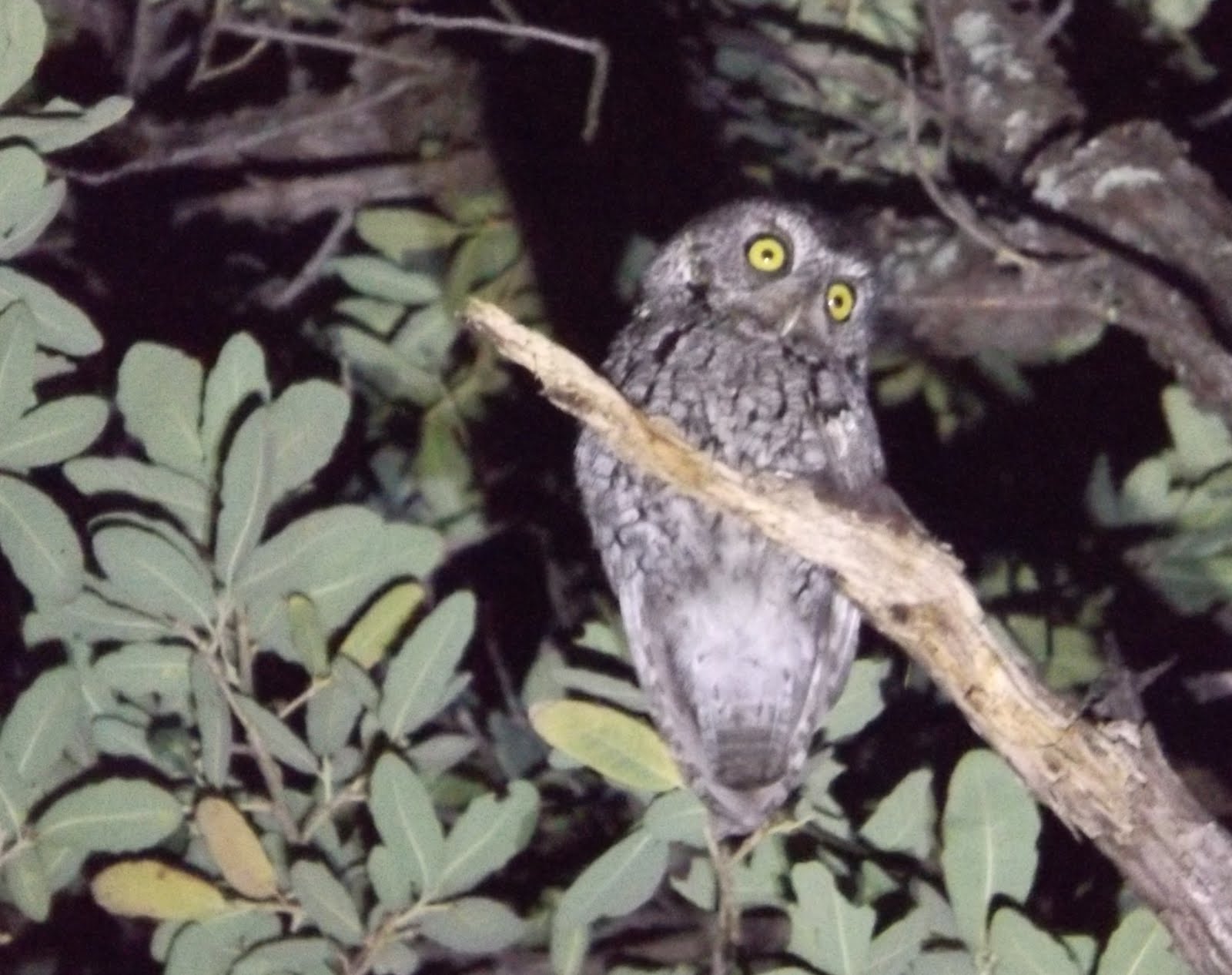
We drove to an area near Stewart Campground to begin our search.  After only 10 minutes of listening, our ears picked out the calls of a Whiskered Screech Owl - one of my major targets for the trip!  By using playback and patiently waiting, we enticed the bird to come in closer and we were able to have some decent views.  The leaders did not shine lights on the owls for any more than 20 seconds at a time.


With such limited time to focus on the owl, this was the best I could manage.

After spending a little while with the owl, the leaders decided to leave it alone, so we walked back to the cars.  Caleb, Dorian, and I heard a Mexican Whippoorwill start calling which was very exciting!  Under the guidance of one of the leaders, Caleb, Dorian, and I were allowed to relocate the owl.  We weren't disappointed!


After a couple shots, the owl flew away and we left as well.  When we got to our room, I noticed great numbers of insects that were attracted to the lights outside.  Naturally, I couldn't help but photograph everything...


A Tenebrid Beetle

A gorgeous Leopard Moth (Grammia incorrupta)

A Plume Moth

A Camel Cricket

An Indomitable Melipotis Moth (Melipotis indomita)

A wolf spider of some sort

A Beloved Emarginea Moth (Emarginea percara)

An Erebid Moth (Bulia deducta)

After photographing the bugs outside, we retired to our room for the night.  Dorian, Caleb, and I had an awesome time talking and hanging out.  But, of course, I became tired quickly and went to sleep.

Today's Accomplishments:  9 Lifers!

1. Chihuahuan Raven  2. Pyrrhuloxia  3. Scaled Quail  4. Slate-throated Redstart  5. Blue-throated Hummingbird  6. Northern Goshawk  7. Buff-breasted Flycatcher  8. Whiskered Screech Owl  9. Mexican Whippoorwill.

Bringing my life list to... 337


Godspeed and good birding,

- Joshua