Showing posts with label Ridgway's Rail. Show all posts

Tuesday, August 16, 2016

A Varied Adventure

Hey Readers!

Another trip was planned not long after the B and M/Tres Rios trip.  This time, Caleb and I would join Steve Hosmer and Barb Meding for some birding at the Organ Pipe Cactus National Monument.  I was especially looking forward to the possibility of Varied Buntings, a stunning finch found somewhat reliably at this spot.  My parents and I worked out logistics with Caleb and his family.  The plan was that I would be dropped off at Caleb's home in Buckeye the afternoon before we were to leave and then Steve and Barb would pick us up the next morning.  I arrived at Caleb's place around 3 pm on June 27th.  After a great dinner cooked by Caleb's Mom, he and I decided to bird the Dean and Beloat Riparian Area before dark.  By 5:15 pm, we were birding.


The "D and B" is located along a stretch of the Gila River and surrounded by agricultural fields.  Tamarisks cover the river and a few cottonwoods still stand strong.  The last time I was here, my lifers Virginia Rail and Sora were calling in the dense riparian cover.  More than anything, I was hoping for a Ridgway's Rail.  One of the first birds we found was a Costa's Hummingbird, a location lifer for Caleb and my first for the entire Buckeye area.                  


Other more common species were present.  These included a Green Heron, many Black-crowned Night Herons, a couple Ladder-backed Woodpeckers, some Common Gallinules, and Summer Tanagers.  Additionally, we detected a pair of Ash-throated Flycatchers.  They are one of few bird species which have actually benefited from the introduction of the aggressive and invasive tamarisks.  A Long-billed Curlew that flew overhead was also an exciting find.  Deep in the reeds, a Virginia Rail gave its unique grunting and 'kiddick' calls.  That bird was notable because it was a likely breeder at the location.  At the spot where we heard the rail, I heard something else that was unusual.  It was a sharp clacking sound coming from a nearby stand of saltbush.  Caleb heard it too and told me that it was a Greater Roadrunner clacking its bill!  I had never heard that before.


A nice comparison shot of an White-winged Dove (left) and Eurasian Collared Dove (right)

After a great time at the D and B, we walked across the road towards the agricultural fields.  
We were here to do a photoshoot with the Burrowing Owls which live along the road...


Caleb photographing a BUOW from across the road...


A Burrowing Owl hovering over a field while hunting


A Lesser Nighthawk - related to owls and swifts rather than raptors as its last name would imply.

Back at Caleb's house, we began to talk.  And we kept talking.  And talking. etc.  Once it had passed midnight and we realized that Barbara Meding and Steve Hosmer would be picking us up at 2 am, we didn't even try to sleep.  Once Barb and Steve arrived, we hopped in the car and took off.  Driving south, Caleb noted a Barn Owl.  At the border checkpoint near the town of Why, AZ, we saw several Lesser Nighthawks fluttering around the bright lights.  

Upon reaching our destination within the Organ Pipe Cactus National Monument, it was still dark and we could hear a Common Poorwill calling.


Later, some Brown-crested Flycatchers kickstarted the dawn chorus.  We hiked along a narrow trail birding as we went.  Tiny bats - possibly Myotis or pipistrelles -  fluttered about above the canyon bed and often flew past our heads.  Some Northern Cardinals sang out from the thickets and a Western Screech Owl flushed from a mesquite and was not relocated.  As light began to fill the canyon, we noted other birds - mostly typical desert species.  Gilded Flickers, Black-tailed Gnatcatchers, Curve-billed Thrashers, Lucy's Warblers, and Black-throated Sparrows being the primary suspects.              


Birds that were present singly included a Fuerte's Red-tailed Hawk, Ladder-backed Woodpecker, American Kestrel, Ash-throated Flycatcher, Northern Mockingbird, and Canyon Towhee.  Many of these birds were Pima County firsts for me as I had very limited experience in the area prior.  A male Scott's Oriole clad in black and yellow was a refreshing find.  Another bird took us by surprise.  A Peregrine Falcon.  It stooped from the sky far above to capture a dove.

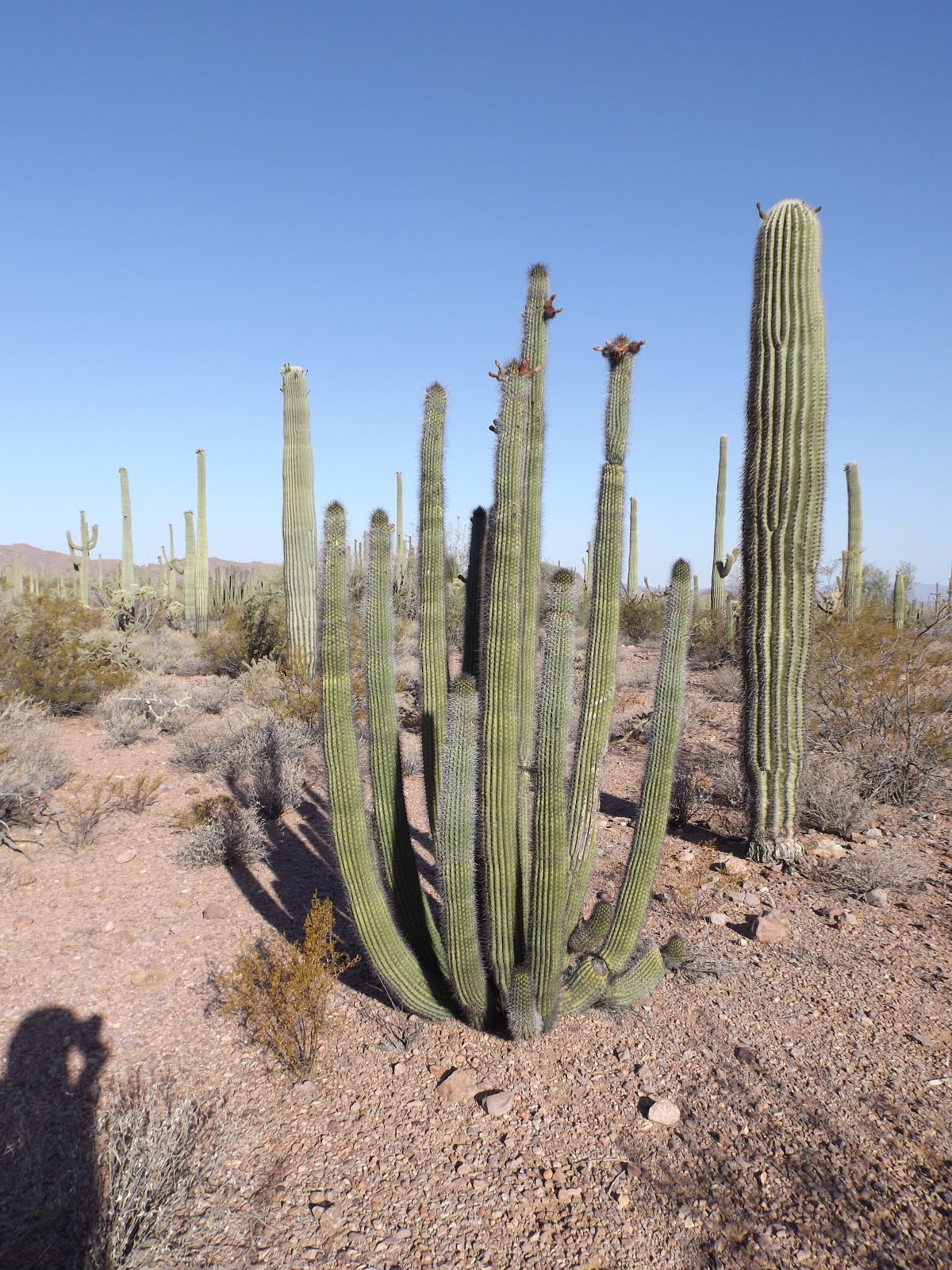
Before that day, I had never seen an Organ Pipe Cactus growing in the wild.  It's a fairly common plant in landscaped yards up in the Phoenix area, although it's not native there.  The Organ Pipe Cactus NM was true to name and surely didn't let me down...


Mixed in with the Organ Pipes, were massive Saguaro Cacti.


Saguaro fruit that was more than likely eaten by a bird.  Perhaps a White-winged Dove?

The wash that runs through Alamo Canyon

While listening on the ridge, Caleb and I heard a finch-like warble coming from the wash below.  I blanked on what it could be, but Caleb knew.  It was the Varied Bunting that I was so looking forward to seeing!  Alas, we could not locate the bird.  

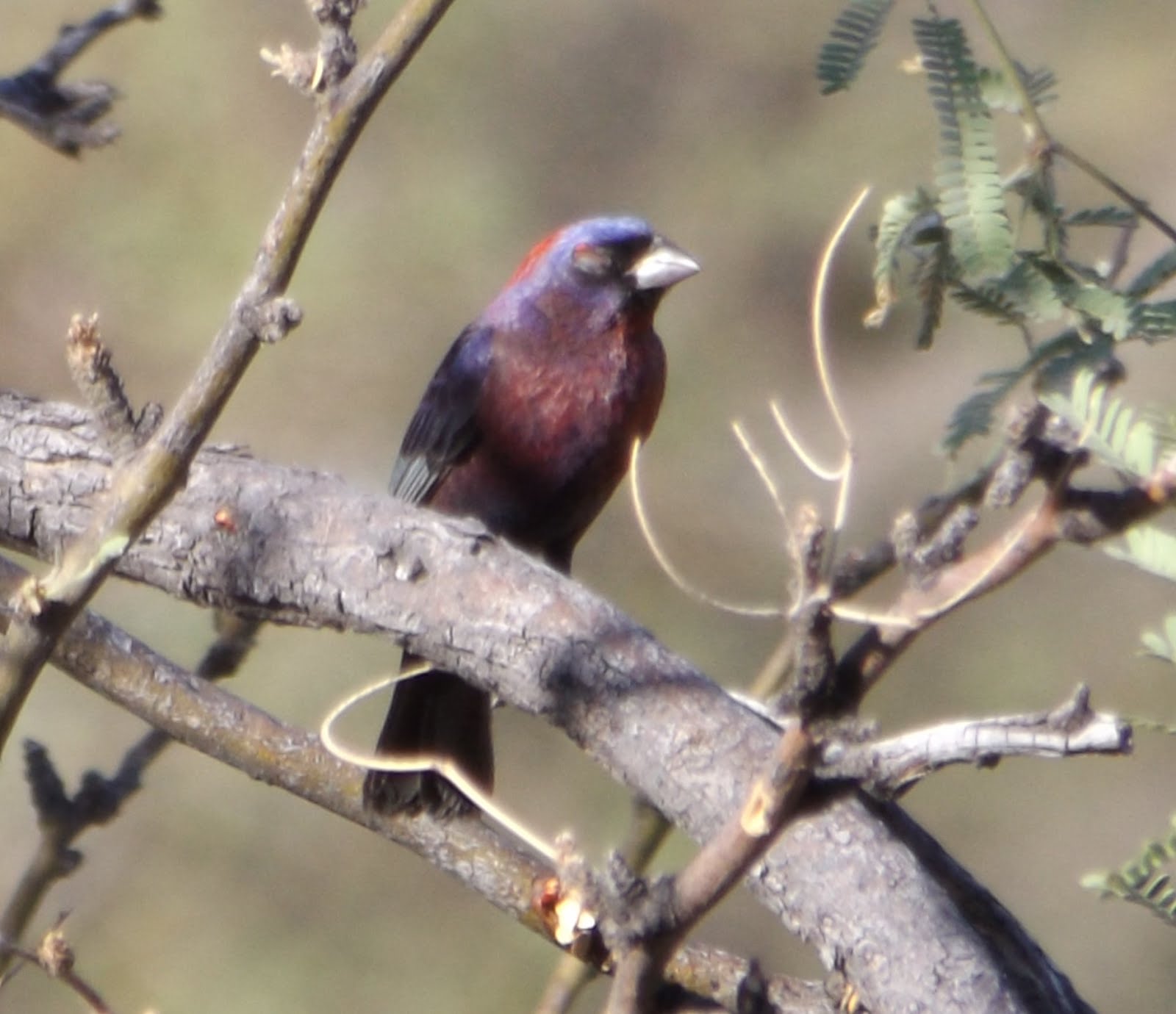
As the morning wore on and the sun burned hot on our skin, we decided to take off, get some lunch, and possibly make some quick stops for shorebirds on the way back to Phoenix.  On the hike out of the canyon we saw 3 Northern Rough-winged Swallows which were slightly unusual at this location.  Further up the trail, I noticed that Caleb and Steve were focused on something off the side of the trail.  Barb and I quickly found that it was a male Varied Bunting on a prominent perch in a mesquite!


What a bird!  In bad lighting, a male Varied Bunting can look entirely black.  We were incredibly blessed to have found one perched in the right light so that its true colors could shine.  

Out of the heat and into the air-conditioned car, we drank copious amounts of water and headed back to the highway.  Stopping at the Space Age Restaurant in Gila Bend, we had a great lunch that was well-needed.  More importantly, I had the opportunity to speak with Steve and Barb and hear some of their stories of birding from across the globe.  Btw, I would highly recommend Space Age's biscuits and gravy! 


We made several quick stops after lunch.  Our first was at the Ajo Sewage Ponds.  The most interesting species there included an Eared Grebe, a Greater Roadrunner, and a day-flying Lesser Nighthawk.

At the Gila Bend Sewage Ponds, we found Blue-winged Teal, Ruddy Ducks, another Eared Grebe, some American Avocets, and around 40 Wilson's Phalaropes.


A male Wilson's Phalarope in breeding plumage.  One of North America's most colorful shorebirds in my opinion.


That moment you realize where you are willing to go in search of birds...

Our final stop of the day was just after noon.  We were in search of Ridgway's Rails at the Arlington Wildlife Area - the last regularly occurring rail I needed for Maricopa County!  Steve, Caleb, and I walked along the powdery dirt road that parallels some good reedy habitat.  We noted an abundance of Black-crowned Night Herons, Common Yellowthroats, Song Sparrows, Red-winged Blackbirds, and Yellow-headed Blackbirds.  We were excited to hear a singing Western Meadowlark, an uncommon breeder in the county.  We also heard a grunting call which comes from another uncommon breeder, a Virginia Rail!  One last bird tipped the scales of luck at this typically non-birdy time of day, my Ridgway's Rail.  It never showed itself.  Although it remains a heard only county lifer for me, I am content with what I did get.  


The dense habitat of the elusive Ridgway's Rail...
      
I enjoyed getting to know Steve and Barb better and appreciated Caleb and I's good conversation perhaps even more so than my world lifer Varied Bunting and Maricopa County lifer Ridgway's Rail.  Even though my passion for birds and their study is intense, I always remember that people matter infinitely more. 


Godspeed and good birding,

- Joshua  

Thursday, May 12, 2016

California Coastal Tour Part 2: High Winds and High Hopes

Hey Readers!


Last time on Adam's Command...

Joshua Smith reacquaints himself with some of California's typical bird species!  He and Desmond Owers bird Webb Canyon Road and find a bunch of special species like California Thrasher, Wrentit, Oak Titmouse, and Olive-sided Flycatcher.  Desmond gets his 200th lifer (the OSFL) and Josh's head  hits the pillow hard back at Granny's house...


A sneak peek of what's to come...


Light comes through the shutters.  I stretch, get dressed, and lace on the hiking boots for an intense day of coastal birding.  First stop: breakfast at our family's favorite Mexican restaurant, El Merendero of La Verne, CA.  Second stop: a quick bathroom break in Huntington Beach, CA where I found this beauty singing his head off in a eucalyptus!


My first photos of a male American Goldfinch in his breeding colors.


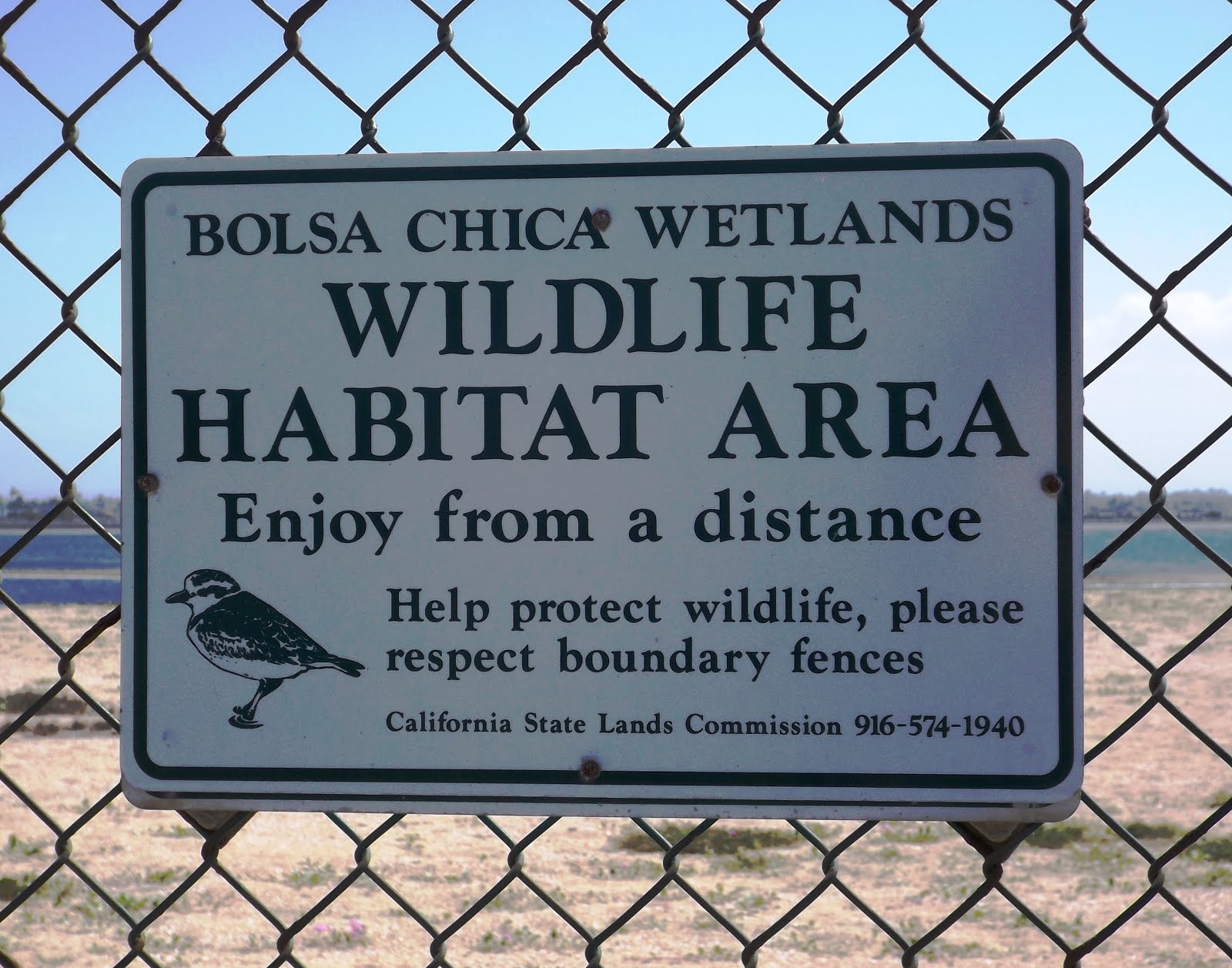
Third stop:  Bolsa Chica Ecological Reserve aka "Tern Central". True to its nickname, someone had reported a rare Gull-billed Tern at the reserve the day before I went!  Typically, Gull-billed Terns stick around the San Diego area, but I guess this guy decided that the hunting would be better further north.  Gull-billed Tern aside, my top birds to see were Ridgway's Rail, Snowy Plover, Surf Scoter, Red Knot, and Whimbrel.  This trip would be my 3rd time birding Bolsa Chica.  Never had I experienced a dull moment here before!


The photo above is interesting in that it shows three species of tern in one frame.  Two Caspians (top left), two Royals (medium birds at right in mid-field), and one Elegant Tern (smallest bird at right).


Horned Grebe in breeding plumage


Common Side-blotched Lizard


Semipalmated Plover - these were fairly common


Ruddy Turnstone in breeding plumage - too far for good shots


Shortly after arriving, I met up with a group of several birders who were searching for the previously reported Gull-billed Tern   Becky Turley was among those birders.  Apparently, she is the top eBirder in California for 2016!  I did not know this until I perused California's eBird stats at home after the trip.  After hearing that the group had spotted the tern, Becky and I joined forces to intercept the bird from the opposite side of the channel over which it was hunting.  Because it is difficult to discern bill color from afar, we relied on habits to ID the bird.  The Gull-billed Tern is not a fisher like other terns, it tends to be more of a kleptoparasite or scavenger.  So, it makes sense that a tern hovering over land would probably be the one.  Within minutes, Becky had the tern in her scope!  The bird was hovering headfirst into the wind.  Becky was very generous in allowing me to peer through for a closer view.  A Gull-billed Tern indeed!  After the tern flew off, a couple other birders joined us to try and relocate the tern.  As we were walking, a man in the group pointed out an area where he has seen Whimbrels before and, sure enough, there were two!                    


My overdue lifer Whimbrel, a species of curlew. 

Further down the path, I noticed a small Larid flying towards me.  A birder yelled: "Bonaparte's Gull straight ahead!"  I managed this next shot as it passed me.  This gull was one of my favorite birds of the trip; a fantastic and quite unexpected lifer.     


This individual was still molting into breeding plumage as can be discerned by its patchy hood.

I spent close to 20 minutes with the group of birders in one area scanning for the Gull-billed Tern.  The tern was a no-show for the remainder of my time at Bolsa Chica, but I did manage to see some new shorebird species!  Becky Turley pointed out both a Dunlin and a Red Knot far out on a sandbar and I was afforded the opportunity to see these birds through her scope.  Not long after I saw my two lifer shorebirds, we all decided to head back as the winds had grown increasingly intense.  One man, whose name escapes me, told me that if I wanted to see a Surf Scoter, that I should check this one area of the inlet.  I took his advice without question and, amazingly, my lifer Surf Scoter was there -  peacefully paddling around on the far side of the inlet!  It was a brilliant male, but the harsh winds and the bird's far distance hindered me from taking any good photos.  I soon met up with a birder couple who had their scopes fixed on a sandbar covered in terns and gulls.  In addition to the usual terns and gulls, there were also some American White Pelicans and Double-crested Cormorants present.                   


The sandbar 


Here are the Elegant Terns.  They have slender bills - more "elegant" you could say.

At the fenced-off nesting area, I noticed a Least Tern sitting on the ground far away.  I made a quick remark to a birder about it and she laughed and told me it was a decoy!  I looked at it again and sure enough, it was a decoy!  Apparently, these decoys are supposed to entice real Least Terns to the area to nest.  Good job to whoever painted these!!!   


The object of my confusion


I assumed that these were decoys too until they started flying!!!


By this point, the wind had gotten to the point where I could no longer view anything in my scope without it shaking.  I decided it would be best to head out for our next stop, but of course I had to stop and check various points along the walkbridge to try in vain for my coveted Ridgway's Rail.  I did not find a single rail.  Instead, another birder pointed one out to me!!!  I could barely believe it...I would have left the reserve never knowing I missed this great bird.  The Ridgway's Rail was maybe 100 yards away from us at the edge of some thick vegetation.  It was actively preening and I got some good looks of its flashy orange bill.  My photos, however, didn't turn out so well...


Check out this Snowy Egret's fancy plumes and gold slippers!


Also, here is a Belding's Savannah Sparrow - an endangered subspecies.


Ah, I couldn't have asked for anything more.  I truly enjoyed my time here at the Bolsa Chica Ecological Reserve.  My seven life birds at this location were:  Gull-billed Tern, Whimbrel, Bonaparte's Gull, Red Knot, Dunlin, Surf Scoter, and Ridgway's Rail!  But my day was far from over, we still had two more stops to make!

4th stop of the day: Huntington Central Park.  This location is less than 10 minutes away from Bolsa Chica and, interestingly, has roughly 30 more species than its neighbor according to eBird.  HCP is a 350 acre park with varying habitat types.  Primarily, these are marshy/brushy areas, open woodland, and grassy areas.  There is also a pond and a hummingbird garden.  First, we birded along a dense marshy area.    


The marshy/brushy habitat type.  Great for warblers and sparrows!


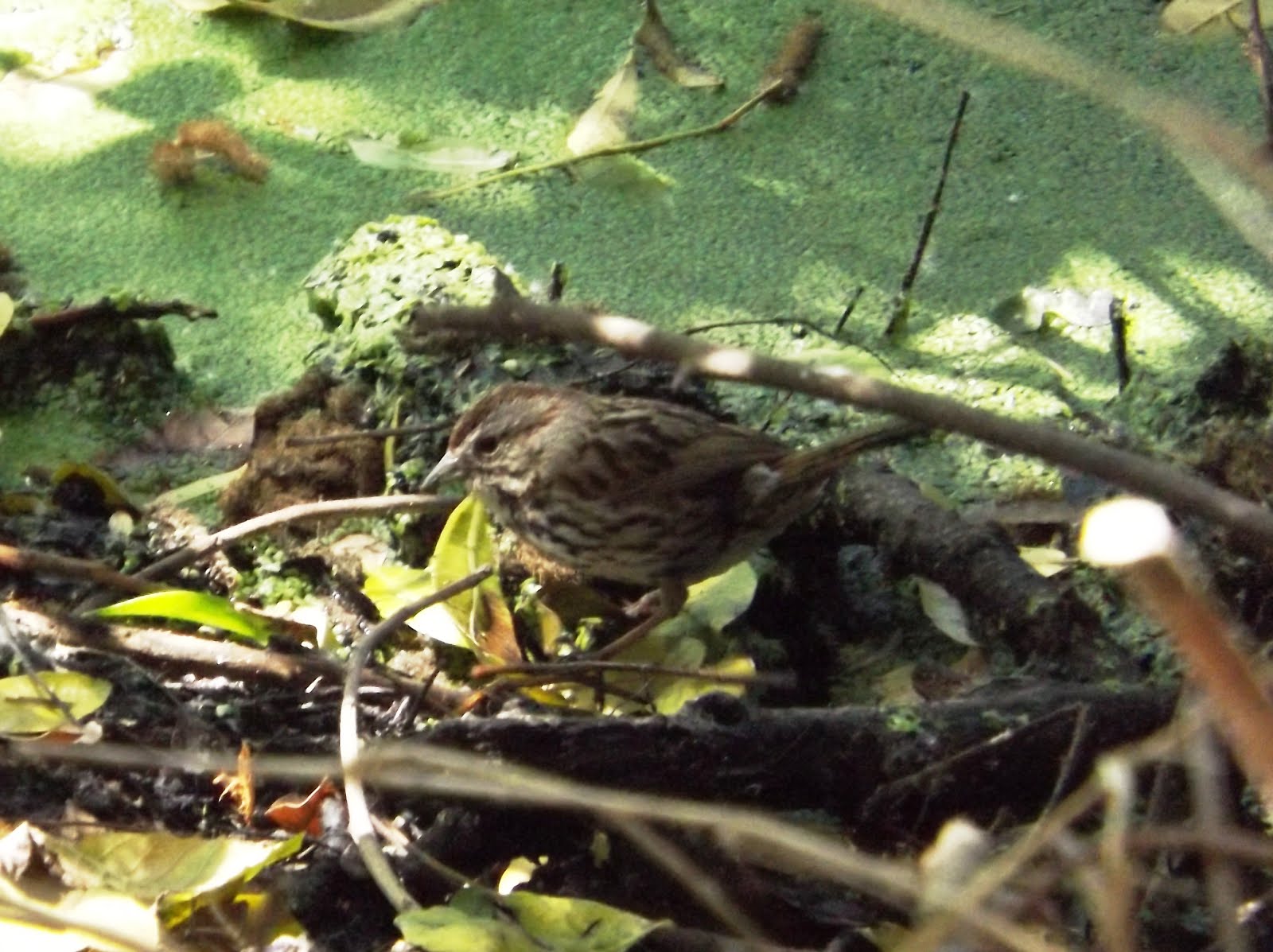
A skulking Song Sparrow


A Black-crowned Night Heron that I unintentionally flushed from a willow stand.


Other birds that I encountered in this area were Green Heron, House Wren, Bewick's Wren, Common Yellowthroat, Yellow Warbler, Yellow-rumped Warbler, and California Towhee.  Moving on, I focused on birding the grassy areas of the park with large trees...    


My first photo of a Downy Woodpecker!


A female Nuttall's Woodpecker.


A poorly focused shot of an American Robin.  


Other species here included Black Phoebe, Warbling Vireo, and Bushtit.  We passed by the pond on our way to the other side of the park hoping for an Egyptian Goose.  Unfortunately, there were no geese present apart from a few Canada Geese that were being fed by a visitor.  There was however a nice assortment of waterbirds including Northern Shoveler, Ruddy Duck, Double-crested Cormorant, Great Egret, Snowy Egret, and Black-necked Stilt.  There was also a lone male Red-winged Blackbird.


The Black-necked Stilt - one of my favorite waterbirds.


After departing from the pond, I encountered the Hummingbird Garden.  It is an exquisitely flowered area that is separtaed from the rest of the park by a chain link fence.  Immediately upon arriving, I found my "lifer" Red-cheeked Waxbill - an introduced species from Africa.  They were so incredibly small that at first I thought they were bugs!  


This pretty little waxbill was missing its tail.  Perhaps from molting?


A scene from the Hummingbird Garden.


Apart from the waxbills, there were no other birds present here - not even hummingbirds!  There was one Queen Butterfly - nothing else.  From here, my Mom, Brother, and I walked up a different trail that led to a dense area with eucalyptus trees that loomed above us.


I found this interesting woven nest in a eucalyptus.  
   

While scanning through the trees, I spotted this hunched over figure...


A roosting Great-horned Owl!


I walked around the tree for a better view...


After spending some time with my first GHOW in the OC, I heard another curious sound and decided to investigate. 


The strange high-pitched whistling call I was hearing was given by a young Allen's Hummingbird that was begging for food from its mother.  I didn't get to see the mother actually feed the fledgling, but I have heard that young hummers are primarily fed a diet of insects which is interesting if you consider the fact that hummers are primarily nectarivorous.  It is difficult to distinguish, but this young bird does have some green on its back which helps separate it from the similar Rufous Hummingbird.  Also, RUHU generally do not breed in California.

As we were leaving the park, I noticed a small swallow-like bird flying away from me.  After locking onto it with my binoculars, I determined it to be a Vaux's Swift - another lifer!  This has truly been the day of last-minute life birds.

5th stop: Newport Pier.  I didn't really expect to find much here, but from what I researched, scanning the ocean from the pier has turned up some nice seabirds before. 


Looking towards the Pacific


My brother and I braved the cold winds at the far end of the pier alongside some fishermen and Midwestern families.  I noticed a couple small rafts of Western Grebes not terribly far from the pier.  


The winds formed some fun waves to watch!


After about 20 minutes of scanning and nothing special, I decided to check out the waters near the pier.  I was pleasantly surprised to find my sole Eared Grebe of the trip.  


These two kids were having fun skateboarding with a homemade sail!


6th stop: Dinner at our favorite seafood restaurant, The Crab Cooker of Newport Beach.      
7th stop: Glendora, CA to visit with our friend and subsequently, retire for the night.

   
There will be a Part 3!  It gets a little colder, even windier, and much further north!!!  


Godspeed and good birding,

- Joshua